🔆 Sunscreen decision fatigue? Download your FREE Sunscreens Quiz Gift & Guide to discover your BEST Sunscreen Match! 👉 HERE
The shopping links may be affiliate links by which I earn small commissions at no extra cost to you. As a K-beauty content creator, I only review and suggest products to help your skincare journey rather than sell or make a profit. If you would like to support me and this website, please shop via the links on this page. Thank you so much for your support 💚Saranghae💚 – from Yuhee (founder) and OEB team xx
👇 Watch the video for a breakdown of this guide and our top Korean sunscreen picks for oily skin!
👇 Do you suffer from dry skin? Watch this video to find out our top Korean sunscreen suggestions for dry skin!
Why Are Korean Sunscreens Always SPF 50+ PA++++?
If you’ve ever browsed Korean skincare, you’ve probably noticed a pattern: nearly all sunscreens are labeled SPF 50+ PA++++. That’s no accident.
In Korea, sunscreen isn’t just skincare. It’s a lifestyle essential. Just like butter goes with bread as a basic, SPF 50+ PA++++ is the baseline, not the upgrade. Daily sun protection is deeply rooted in K-beauty culture because UV rays are the #1 cause of aging, pigmentation, and long-term skin damage. Korean consumers take UV protection seriously, so to survive in this highly competitive market, brands consistently release sunscreens with the highest protection ratings available.
Let’s decode what SPF and PA ratings actually mean and why Korean sunscreens lead the way in high-performance sun care.
🔆 What Does SPF 50+ Mean?
SPF (Sun Protection Factor) measures how well a sunscreen protects you from UVB rays.
Think “B” for burning. These UV rays cause sunburn and redness, and can contribute to skin cancer.
Here’s a quick breakdown:
SPF 30 blocks about 97% of UVB rays
SPF 50 blocks about 98%
SPF 50+ indicates very high UVB protection, but still requires reapplication every 2 hours.
According to the CDC, practicing good sun safety including using high-SPF sunscreen, is key to preventing skin cancer and sunburn-related damage.
In Korean skincare, SPF 50+ is the standard because it offers maximum daytime protection to shield your skin from premature aging, hyperpigmentation, and numerous other issues.
Top Korean SPF 50+ Sunscreen for Oily Skin:
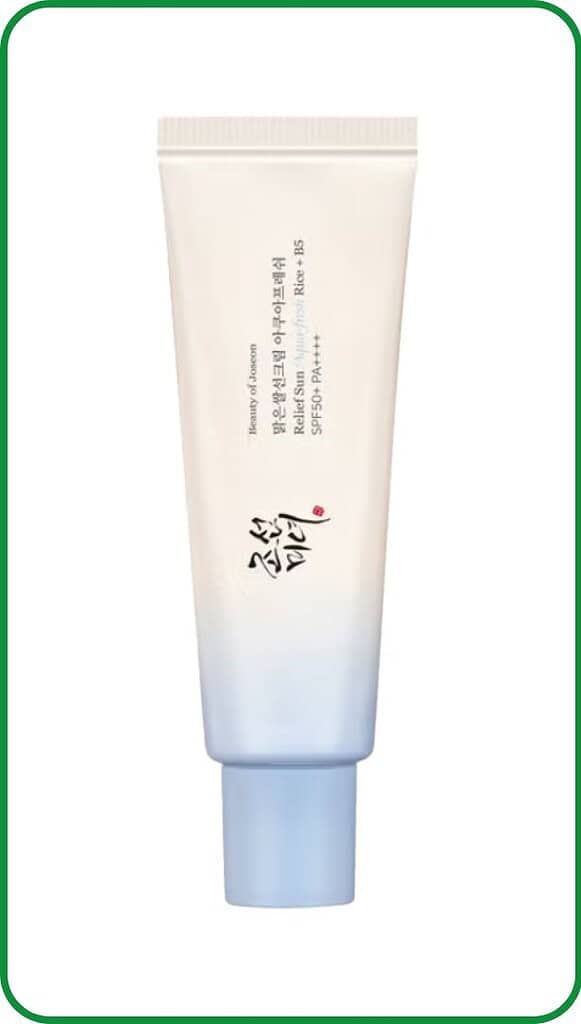
Beauty of Joseon
Relief Sun Aqua-Fresh: Rice + B5
SPF50+ PA++++
Top Korean SPF 50+ Sunscreen for Dry Skin:
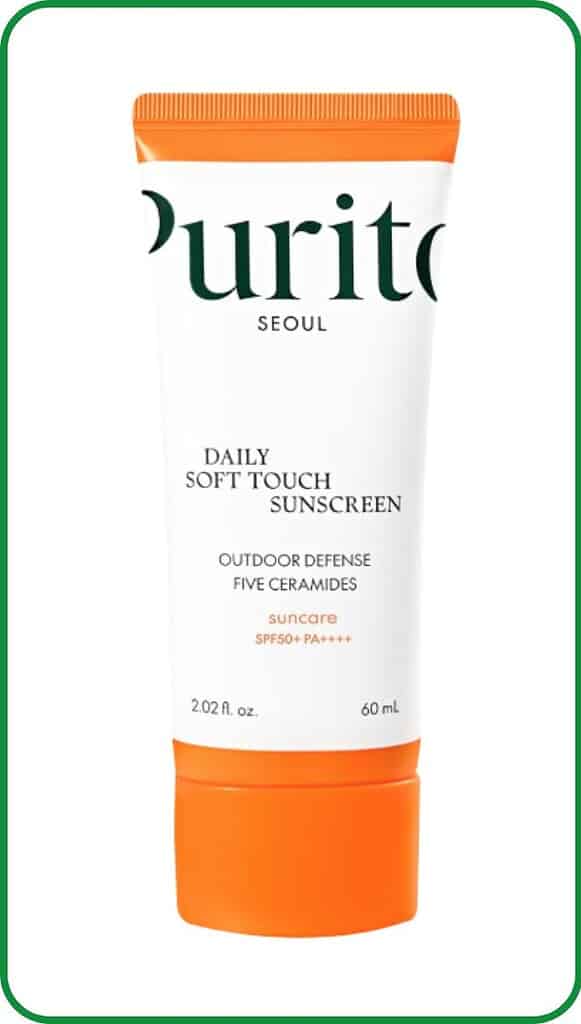
Purito
Daily Soft Touch Sunscreen
SPF50+ PA++++
These formulas are lightweight, hydrating, and perfect for use under makeup, without greasiness or a white cast.
👉 Want more SPF 50+ picks for your skin type?
Check out our article on Top Sunscreens for Dry Skin + Korean Sunscreens for Oily Skin
🔆 What Does PA++++ Mean?
PA (Protection Grade of UVA) tells you how well a sunscreen protects against UVA rays.
Think “A” for aging. These rays penetrate deep into the skin, causing wrinkles, sagging, and pigmentation, and yes, they pass through glass.
PA+++ = High UVA protection
PA++++ = Extremely high UVA protection
As explained by Colorescience, PA ratings are crucial indicators of how well your sunscreen shields you from long-term aging and skin damage caused by UVA rays.
Since slow-aging is a major skincare goal in K-beauty, high UVA protection is non-negotiable in Korean sunscreens.
Top Korean PA++++ Sunscreen for Oily Skin:
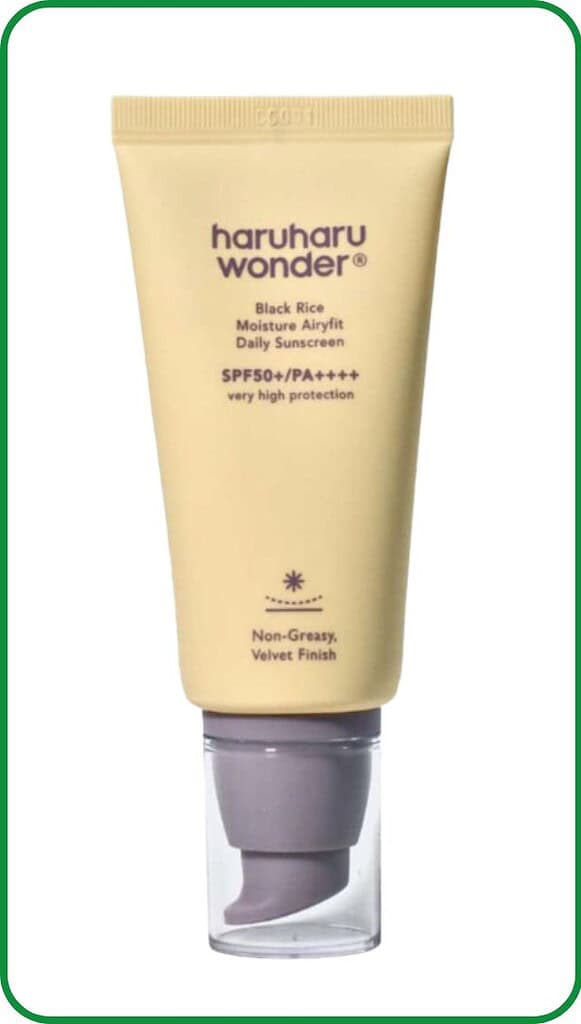
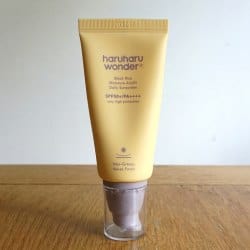
HaruHaru Wonder
Black Rice Moisture Airyfit Daily Sunscreen
SPF50+ PA++++
Top Korean PA++++ Sunscreen for Dry Skin:
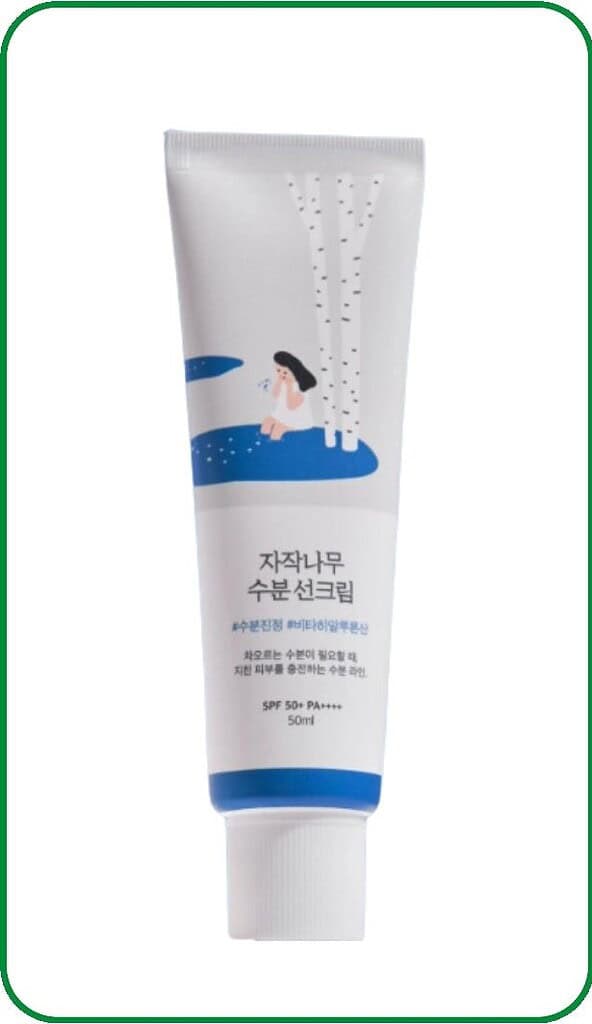
Round Lab
Birch Juice Moisturizing Sunscreen
SPF50+ PA++++
👉 Check out our article to find out more Korean sunscreen recommendations by skin type:
Top Sunscreens for Dry Skin
Korean Sunscreens for Oily Skin
What Makes a Great Korean Sunscreen?
In conclusion, look for these must-haves:
✔️ SPF 50+ and PA++++
✔️ Broad-spectrum protection (against both UVA and UVB), preferably listed high in the ingredients.
✔️ Modern UVA filters, once again, preferably listed high in the ingredients.
Common Broad-Spectrum UV Filters:
- Avobenzone (Butyl Methoxydibenzoylmethane – Chemical UV Filter)
- Zinc Oxide (Mineral UV Filter)
- Titanium Dioxide (Mineral UV Filter)
- Tinosorb S (Bis-Ethylhexyloxyphenol Methoxyphenyl Triazine – Chemical UV Filter)
- Tinosorb M (Methylene Bis-Benzotriazolyl Tetramethylbutylphenol – Hybrid UV Filter that absorbs + reflects UV)
Common UVA-Specific Filters:
- Uvinul A Plus (Diethylamino Hydroxybenzoyl Hexyl Benzoate – excellent chemical UVA1 protection)
- Avobenzone (Butyl Methoxydibenzoylmethane – another excellent chemical UVA blocking filter, used globally.)
✔️ Formulated for your skin type (oily, dry, acne-prone, sensitive)
👉 Discover your perfect sunscreen match for your skin by downloading our Korean Sunscreen Guide & Quiz HERE
✨ Why Korean Sunscreens Are So Popular
It’s not just the high protection ratings, but Korean sunscreens are loved for their elegant, breathable textures that make daily SPF feel like skincare, not a chore. No chalky residue, no stickiness, and no heavy white cast! Chemical formulas especially blend invisibly, while mineral options now leave only a minimal cast, thanks to next-gen formulations.
Whether you prefer a creamy mineral sunscreen or a lightweight, serum-like chemical formula, there’s a texture to match every skin type and routine.
Plus, they’re infused with skin-loving ingredients like ceramides, hyaluronic acid, and centella asiatica—so while you’re shielding your skin from UV damage, you’re also hydrating, calming, and supporting your skin barrier at the same time.
In fact, The Cut explored why Korean sunscreens have become such a sensation and why they often outperform their Western counterparts in both texture and experience. That’s why in K-beauty, SPF isn’t just protection, but it’s part of your skincare glow-up!
🔍 Still Not Sure Which SPF 50+ PA++++ Sunscreen to Pick?
👉 Download Your Korean Sunscreen Quiz & Guide HERE
It’s a quick and easy way to discover the best Korean sunscreen for your skin type, concerns, and routine! Take the quiz and find your SPF match today!
Product links lead to YesStyle and Olive Young Global
Extra 2 – 5% off at YesStyle using the code 👉 YUHEE10
Get 5% off at Olive Young Global with our code 👉 OEB10OY