Retinoids are considered the gold standard in skincare, especially for mature skin over 30, 40, 50 and beyond. It’s no surprise that Korean skincare offers a wide range of effective products formulated with retinol, retinal, and other retinoid derivatives. However, these ingredients are also surrounded by several common myths.
One of the biggest misconceptions is that retinol is a relatively new ingredient in Korean skincare. In reality, pioneering brands such as Enprani and IOPE have been developing retinol-based product lines for more than 20 years. While retinoids have recently become more popular among Korean beauty brands, they are far from a new trend.
Another common belief is that Korean retinoids are weaker than their Western counterparts. In reality, that’s often not the case. Korean formulations are often designed to be more suitable for sensitive skin by combining retinoids with soothing and barrier-supporting ingredients. There’s a good reason for this approach. Some studies suggest that East Asian skin may be more susceptible to irritation from certain skincare ingredients, which is one reason many Korean retinol & retinal products emphasize barrier-supporting ingredients. Even so, choosing the right product is only half the battle – introducing retinoids gradually into your routine is the key to getting the best results.
In the OEB skincare method, retinol and retinal are used only in the evening routine. As active ingredients, they are applied after hydrating products and before nourishing products, making them part of the third step in the routine. Regardless of which retinoid you choose, daily sunscreen is essential.
The shopping links may be affiliate links, which means we earn a small commission at no extra cost to you. We only recommend products we truly believe in to support your skincare journey. If you’d like to support us, please shop through the links on this page. Thank you so much! with 💚from Yuhee (founder) and the OEB team xx
Retinol vs Retinal: What’s the Difference?
You’ve probably come across names like retinol, retinal, or Hydroxypinacolone Retinoate (HPR). They’re all members of the retinoid family – vitamin A derivatives that help improve skin texture, reduce the appearance of fine lines, and promote a more even complexion.
Retinol is the most common cosmetic retinoid. Before it can work, your skin must convert it first into retinal and then into retinoic acid, the active form that interacts with skin cells. Because of these extra conversion steps, retinol is generally less potent than retinal, although it’s also well studied and highly effective when used consistently.
Retinal requires only one conversion step to become retinoic acid. As a result, it’s considered more potent than retinol and often delivers results more quickly. Many modern skincare brands have started incorporating retinal into their formulas because it offers an excellent balance between efficacy and tolerability.
Hydroxypinacolone Retinoate (HPR), sometimes marketed as a “next-generation retinoid,” is another popular ingredient. Unlike retinol and retinal, HPR binds directly to retinoid receptors without requiring conversion in the skin. It has gained popularity because it’s generally considered gentler while still providing anti-aging benefits. However, compared with retinol and retinal, there is currently less clinical research confirming its long-term effectiveness.
How to introduce retinoid to your routine?
Retinoids require a slow and careful introduction, especially if you’re new to these ingredients. Avoid starting with the highest concentration or applying large amounts right away. Instead, begin with a low-concentration product and use only a pea-sized amount for your entire face.
When introducing retinol or retinal, start by applying it once or twice a week, then gradually increase the frequency as your skin builds tolerance. Pay attention to how your skin reacts – some dryness, mild peeling, or sensitivity can happen during the adjustment period, but persistent irritation is a sign that you may need to slow down.
One popular technique that can make the adjustment period easier is the sandwich method. Just like a traditional sandwich, it involves layering your retinoid between two layers of moisturizer. Start with a thin layer of moisturizer, apply your retinol or retinal product once it has absorbed, and then follow with another layer of moisturizer. This creates a buffer between the active ingredient and your skin, helping to reduce the risk of irritation.
The sandwich method is slightly different from the OEB skincare method, where active ingredients are applied after hydration and before nourishing steps. However, it can be a useful approach for beginners or those with sensitive skin who want to introduce retinoids more comfortably.
As your skin builds tolerance, you can gradually transition from the sandwich method to the standard OEB skincare step routine if your skin feels comfortable doing so.
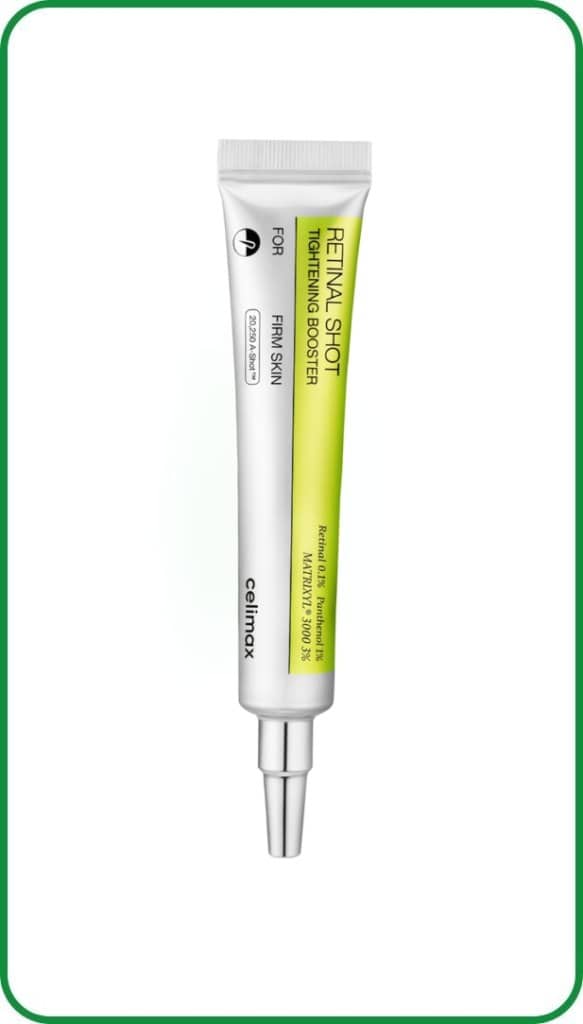
Celimax The Vita-A Retinal Shot Tightening Booster
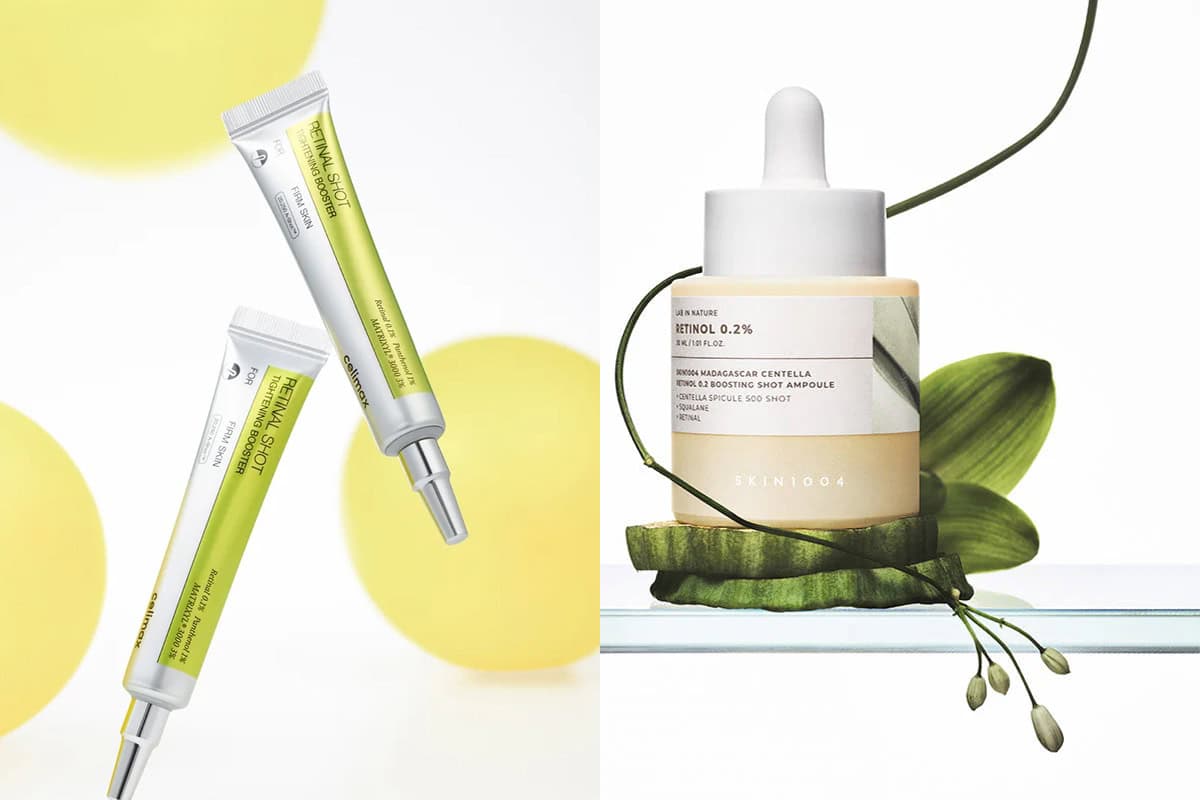
While many retinol products can be suitable for younger skin, Celimax The Vita-A Retinal Shot Tightening Booster is a formula that may appeal most to mature skin looking for targeted wrinkle care. Its key ingredients include 0.1% pure retinal encapsulated in liposomes, a delivery system designed to help protect the ingredient and support its absorption, as well as 20,250 A-Shot™, a micro-spicule technology made from hydrolyzed sponge that helps improve the delivery of active ingredients into the skin.
However, the formula doesn’t rely only on retinal. It is also enriched with Matrixyl® 3000, a peptide complex developed by Sederma, which is known for its role in supporting the skin’s natural collagen processes. Together, these ingredients create a well-rounded anti-aging serum designed to help improve the appearance of fine lines, wrinkles, and loss of elasticity.
Recommended for: Mature skin looking to target wrinkles and loss of elasticity.
Celimax
The Vita-A Retinal Shot Tightening Booster
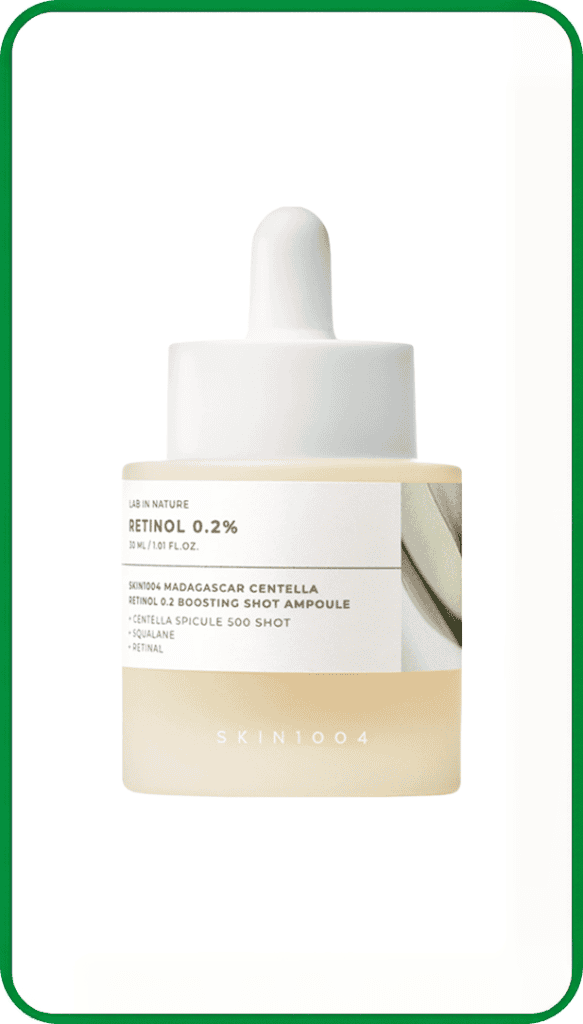
SKIN1004 Lab in Nature Madagascar Centella Retinol 0.2 Boosting Shot Ampoule
Lab in Nature is a relatively new line from SKIN1004 that focuses on combining the soothing benefits of Madagascar centella with powerful active ingredients such as retinol and retinal. The Madagascar Centella Retinol 0.2 Boosting Shot Ampoule is designed for those who want to incorporate retinoids into their routine while still prioritizing skin comfort and barrier support. Although the formula contains 0.2% retinol, it also focuses on a balanced approach by combining retinoid technology with calming and hydrating ingredients.
Similar to Celimax, SKIN1004 uses micro-particle technology in this ampoule. These particles are infused with ingredients like centella and panthenol, which help support the skin barrier and make the retinoid experience more comfortable. The formula also contains squalane, a lightweight moisturizing ingredient known for helping maintain skin hydration and softness, making this ampoule a good option for those who want anti-aging benefits without sacrificing moisture.
With its combination of retinol, soothing ingredients, and barrier-supporting components, this product may be especially appealing for people who are looking for a more balanced introduction to retinoids or want an anti-aging serum that feels more nourishing than traditional retinol treatments.
Recommended for: Normal, dry, and mature skin looking for anti-aging benefits and extra hydration.
SKIN1004
Lab in Nature Madagascar Centella Retinol 0.2 Boosting Shot Ampoule
Which Korean Retinoid Should You Choose?
Neither of these products is the best choice for complete retinoid beginners, as micro-spicule technology can create a more intense sensation and may increase the risk of irritation during the adjustment period. However, if your skin is already familiar with retinol or other retinoids, both Celimax and SKIN1004 can be interesting options to consider.
While both products combine retinoids with soothing ingredients, they have slightly different focuses. SKIN1004 is a better choice for those looking for a more balanced anti-aging treatment with extra hydration and barrier support, making it a great option for skin that tends to feel dry or easily irritated. Celimax, on the other hand, is more targeted toward mature skin concerns, especially deeper wrinkles, loss of elasticity, and a desire for a stronger wrinkle-care focused formula.
If you’re new to retinol or retinal, or your skin is particularly sensitive, you may want to start with gentler formulas before moving on to more advanced options. Products like Innisfree Retinol Cica Repair Ampoule, Dr.G Black Snail Retinol Ampoule, or Dr. Althea Pure Retinol 0.15% Cream are designed to provide retinoid benefits while focusing on skin comfort and barrier support.
However, if micro-spicules feel too intense or you’re not ready for a retinol/retinal and spicule combination, it may be better to begin with a traditional retinol product first. Check out our guide to retinol products for more beginner-friendly options and help choosing the right formula for your routine.
Ultimately, neither product is universally “better.” The right choice depends on your skin’s experience with retinoids, your tolerance to micro-spicules, and whether your priority is intensive wrinkle care or barrier-supported anti-aging.
Celimax vs SKIN1004 Comparison Cheat Sheet
|
Product |
Skin Type |
Key Ingredients |
|---|---|---|
|
Mature skin looking to target wrinkles and loss of elasticity. |
Retinal 0.1%, Matrixyl® 3000 (peptides), Hydrolyzed Sponge (A-Shot™ micro-spicules), Panthenol, Niacinamide |
|
|
SKIN1004 Lab in Nature Madagascar Centella Retinol 0.2 Boosting Shot Ampoule |
Normal, dry, and mature skin looking for anti-aging benefits and extra hydration. |
Retinol 0.2%, Retinal, Hydrolyzed Sponge (micro-spicules), Centella Asiatica Extract, Panthenol, Squalane |
Celimax Tightening Booster vs SKIN1004 Boosting Shot Ampoule FAQs
Is Celimax The Vita-A Retinal Shot Tightening Booster stronger than SKIN1004 Lab in Nature Madagascar Centella Retinol 0.2 Boosting Shot Ampoule?
It’s not easy to directly compare these two formulas. In general, 0.1% retinal is considered more potent than 0.2% retinol, as retinal requires fewer conversion steps to become active retinoic acid. However, SKIN1004’s formula combines both retinol and retinal, along with soothing and barrier-supporting ingredients, making the overall experience more complex than simply comparing percentages. The final result depends not only on the type and concentration of retinoid but also on the supporting ingredients and how well your skin tolerates the formula.
Can beginners use Celimax The Vita-A Retinal Shot Tightening Booster?
The combination of retinal and micro-spicules may not be the best starting point for someone completely new to retinoids. While Celimax The Vita-A Retinal Shot Tightening Booster can be a great option for more experienced users, beginners may want to start with a gentler formula to help their skin build tolerance.
For those who want to try Celimax, the brand also offers The Vita-A Retinol Shot Tightening Serum, which is a milder alternative compared with the retinal version. If you’ve never used retinol or retinal before, starting with a traditional retinoid product without spicules may be a more comfortable way to introduce these ingredients into your routine.
Can I use retinol and retinal during summer?
Yes, you can continue using retinol or retinal products during the summer. The idea that you have to stop using retinoids during warmer months is a common myth. However, sunscreen becomes even more important when using retinoids, so make sure to apply broad-spectrum SPF regularly and maintain good sun protection habits throughout the day.
Which product gives faster anti-aging results?
Retinol and retinal are not quick fixes – they are long-term skincare ingredients that require consistency and patience. While some improvements in skin texture may appear earlier, it usually takes around 3 months of regular use to see more noticeable anti-aging results from vitamin A derivatives. The “faster” option depends not only on the type of retinoid but also on the formula, concentration, supporting ingredients, and how consistently your skin can tolerate and use the product.
In this case, Celimax The Vita-A Retinal Shot Tightening Booster may be a more appealing option for those looking for a more targeted anti-aging formula, as it combines retinal with Matrixyl® 3000, a peptide complex known for supporting the appearance of firmer, smoother skin.
Product links lead to YesStyle and Olive Young Global
Extra 2 – 5% off at YesStyle using the code 👉 YUHEE10
Get 5% off at Olive Young Global with our code 👉 OEB10OY
Why You Can Trust OEB (One Eye Beauty):At OEB, we don’t just share skincare. We deep-dive, fact-check, and ingredient-decode every recommendation with intensive research and science-backed analysis. All of this is guided by Yuhee’s expertise as a certified well-aging skincare coach, committed to helping your skin glow at every age. Yes, we use affiliate links, but our opinions are never for sale. Because no matter what, your skin comes first. Always.